
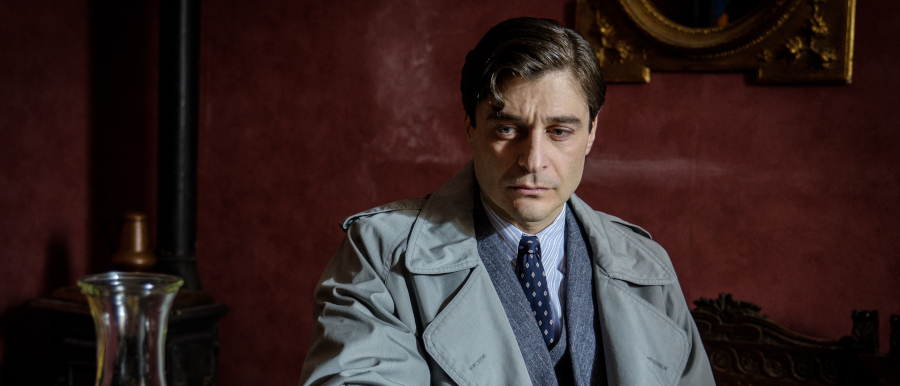
Naples, 1930s. A man walks into crime scenes carrying a curse most would call a gift, and a gift most would call unbearable. Commissario Ricciardi follows an inspector who can see the ghosts of the violently killed and hear their final thoughts, a supernatural burden that makes him a brilliant detective and a deeply lonely man. This is a series that asks what it costs to carry other people’s pain as evidence.
The Complex Characters of Commissario Ricciardi
At the heart of Commissario Ricciardi is Lino Guanciale’s performance as the enigmatic inspector: restrained, haunted, and quietly magnetic. Guanciale plays Ricciardi as a man who has learned to mask torment as professionalism, solving crimes through a gift he can never fully explain to those around him. Antonio Milo brings warmth and procedural grounding as Ricciardi’s loyal colleague, while Enrico Ianniello and Serena Iansiti add further dimension to the world investigating alongside him.
Naples, Class, and the Voices of the Dead
One of Commissario Ricciardi’s most powerful choices is treating the supernatural not as spectacle but as intimacy: the dead speak once, briefly, and Ricciardi alone bears the weight of listening. Maria Vera Ratti, Mario Pirrello, Marco Palvetti, and Nunzia Schiano round out a Neapolitan world where status, secrecy, and grief collide. Trust becomes the series’ rarest currency, since Ricciardi’s gift is one he can share with no one.
3 Themes That Define Commissario Ricciardi
Commissario Ricciardi builds its dramatic architecture around three enduring tensions. First, isolation: a man set apart from everyone he protects by a secret he cannot confess. Second, justice: the pursuit of truth for victims who can no longer speak for themselves, except to him. Third, empathy: the series’ insistence that understanding pain, not simply solving crime, is what makes a great detective. Director Alessandro D’Alatri frames these tensions against 1930s Naples with atmospheric precision, letting period detail deepen rather than decorate the mystery.
Why Commissario Ricciardi Resonates with Modern Audiences
Crime drama earns its place in a crowded genre when its central gimmick becomes emotional truth rather than novelty. Commissario Ricciardi succeeds because its supernatural premise is really a metaphor for something universal: the isolating weight of seeing what others cannot, and caring anyway. The series turns a ghost story into a study of grief, duty, and the quiet cost of empathy.
The Dramatic Power of a Story Long Overdue
Alessandro D’Alatri brings a moody, atmospheric directorial vision to Commissario Ricciardi: intimate in scale, haunting in tone. The production design steeps every scene in the textures of 1930s Naples, from opera houses to shadowed back streets. Commissario Ricciardi never lets its supernatural premise overwhelm its humanity. It trusts its detective’s ache to carry the story, and that trust is exactly what the audience feels.
Where to Watch
Catch Commissario Ricciardi on Viasat Epic Drama this August:
- Showing:
- Dates:
- 22 August 2026 (Saturday)
- 29 August 2026 (Saturday)
- Time: 21:00 CET CEE
- Dates:
- See full TV schedule
FAQ: Commissario Ricciardi
Q: Is Commissario Ricciardi based on a book series?
A: Commissario Ricciardi centers on a supernaturally gifted police inspector in 1930s Naples, adapted for television with a strong sense of period atmosphere and character-driven mystery, prioritizing emotional depth over procedural formula.
Q: What makes this series different from other detective dramas?
A: Unlike conventional crime series, Commissario Ricciardi builds its mysteries around a supernatural gift, the ability to hear the last thoughts of murder victims, turning each case into an intimate encounter with grief rather than a straightforward investigation.